Desi Aunty Bath And Dress Change Very Hotzip Exclusive (Simple · 2027)



Bright Contracts is a software package that has everything you need to create and manage a professional staff handbook and contracts of employment. Getting these in place has traditionally been an expensive, complicated and time-consuming process. Bright Contracts makes it quick and easy.
Without employee contracts in place, an employer is risking large settlements in the case of staff disputes, and fines in the case of regulatory inspections. Having contracts also clearly defines the contractual relationship between you and your employees. Bright Contracts is the easiest way to get sorted.
| Single employer, unlimited employees | €255 |
|---|---|
| Multiple employers, unlimited employees | €359 |
| Phone/email support | Free |
Price is per user and subject to VAT. Price covers 12 months full use from date of activation.

Let us show you around the software’s functionality and how to create and customise your personal contracts of employment and company handbook.
To book an online demo click here

Under the Employment Act 2019, it is now a criminal offence for employers not to have contracts of employment in place for their staff. Watch our 2 minute video to find out how Bright Contracts can help.

Our regular employment law webinars will keep you up to date with the topical HR issues that our employers face day to day.
To view our upcoming webinars click here
To view our webinars on demand click here

Bright Contracts is teeming with useful functionality, from the obvious to the obscure. Yet it delivers it all in a neat, easy to use package. You'll wonder how you ever managed without it.

Bright Contracts does not set a limit on the number of employees you can add. And there are no confusing price brackets that depend on the number of employees you have.

Use the suggested content or customise it to your needs. Add pre-defined sections or add your own proprietary sections. Re-arrange as required.

Create a contract for each employee and record when they are signed. Archive old contracts. Base one contract on another for rapid creation.
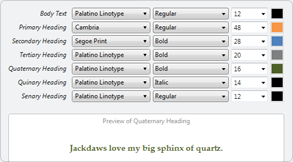
With full control over cover pages, logos, headers, footers, fonts, colours, and more, you can ensure your documents match your corporate identity, or just simply make them look how you want.
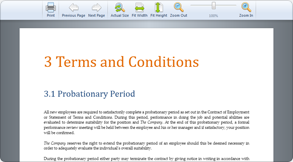
Before you print a handbook or contract, you can see an accurate on-screen preview of how it will look on page. Scroll, zoom and pan controls make it simple and flexible.
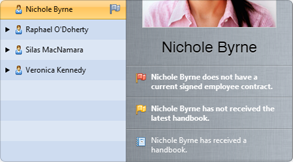
An employee is flagged red if he or she does not have a handbook or contract. An employee is flagged amber if he or she has an out of date handbook or soon to expire contract.

The summary screen gives you an overview of handbooks in use, recent handbook updates, who does and doesn't have a handbook, and who does and doesn't have a current signed contract.
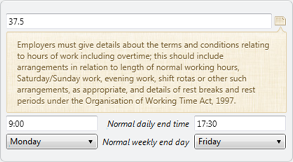
Not everyone is an employment law expert. If you're not sure what to enter for a certain field, or you're not 100% sure what something means, click the handy tip icon for an inline explanation.

Employment law legislation changes over time. When it does, and the Bright Contracts handbook or contract template changes, you'll be made aware of the adjustment, which you can accept with a single click.
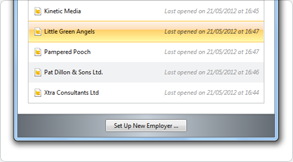
Expand the services you offer or add a new revenue stream to your business wih the Bureau version of Bright Contracts, which allows you to create handbooks and contracts for unlimited employers and employees.
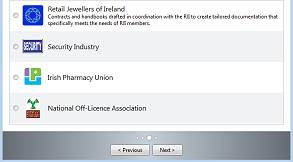
Bright Contracts partners with professional bodies and groups to create bespoke contracts and handbooks. Industry customisation is an excellent value added member offering for any professional group.
Indian lifestyle and cooking traditions are a vibrant tapestry woven from thousands of years of history, diverse geography, and deep-seated spiritual beliefs. From the snow-capped Himalayas in the north to the tropical shores of the south, India’s way of life is a sensory-rich experience where food is not just sustenance—it is a sacred offering, a communal bond, and a form of preventive medicine. The Philosophy of Food: More Than Just a Meal
While globalization has introduced fast food and modern appliances, the core of Indian cooking remains resilient. There is a growing movement to return to "slow cooking" using clay pots and heirloom grains like millets. Today, Indian lifestyle and cooking traditions continue to fascinate the world, not just for their bold flavors, but for their ability to nourish both the body and the spirit.
The Indian lifestyle is inherently communal. Festivals like are defined by specific culinary traditions—preparing massive quantities of sweets (Mithai) or slow-cooked biryanis to share with neighbors and the less fortunate. desi aunty bath and dress change very hotzip exclusive
In Indian culture, the concept of (The Guest is God) dictates that hospitality is a primary duty. Cooking is rarely a solitary or purely functional act; it is an expression of love and respect.
Influenced by Persian and Mughal history, Northern cooking is known for its rich, creamy gravies, tandoori ovens, and wheat-based breads like Naan and Paratha. Ingredients like saffron, nuts, and dairy are staples. Indian lifestyle and cooking traditions are a vibrant
Here, rice is the hero. The flavors are dominated by coconut, tamarind, and fermented lentils. Think of the iconic Dosa, Idli, and tangy Sambar. The use of curry leaves and mustard seeds tempered in hot oil is a signature technique.
If the heart of Indian cooking is the ingredients, its soul is the . Spices are never added randomly; they are toasted, ground, or tempered in a specific order to release their essential oils. Turmeric provides anti-inflammatory benefits, cumin aids digestion, and cardamom refreshes the palate. The "Masala Dabba" (spice box) is a treasured heirloom in every kitchen, containing the fundamental building blocks of flavor. Lifestyle and Community There is a growing movement to return to
This region offers a stark contrast between the fiery, meat-heavy dishes of Rajasthan and the intricate, predominantly vegetarian "Thalis" of Gujarat. Coastal regions like Goa bring a unique Portuguese influence, featuring vinegar and bold chilies. The Ritual of Spices (Masala)
Central to Indian culinary traditions is the ancient science of . This "Science of Life" teaches that food should be "Sattvic" (pure and promoting clarity), "Rajasic" (stimulating), or "Tamasic" (heavy). Most traditional households aim for a balance, using seasonal ingredients and specific spices to maintain bodily equilibrium. This is why a typical Indian meal—the Thali —is designed to include six distinct tastes: sweet, sour, salty, bitter, pungent, and astringent. Regional Diversity: A Culinary Map
Even daily life revolves around the kitchen. In many families, the day begins with the whistling of a pressure cooker and the aroma of fresh "Chai" brewing with ginger and cardamom. Meals are often eaten together, traditionally sitting on the floor, which is believed to aid digestion and foster humility. Modern Evolution
Home
Product features
Download / view pricing
Order online
Support / documentation
The Bright Contracts Blog
About us
Contact us
Privacy policy



Copyright © Thesaurus Software Ltd. All rights reserved.
Unit 35 Duleek Business Park, Duleek, County Meath, A92 N15E, Ireland
+353 (0)1 8499699
+353 (0)1 8359991
www.thesaurus.ie
Copyright © 2026 Bold Plaza