

Wed 10th - Mon 15th June 2026
Arena, Campsite, Gate, Tower volunteers
3x 8-hour shifts, spread from Wednesday - Monday
Donington Park, Leicestershire, DE74 2RP
Linkin Park, Guns N' Roses, Limp Bizkit, Bad Omens, Electric Callboy, Trivium, Architects and LOADS more!
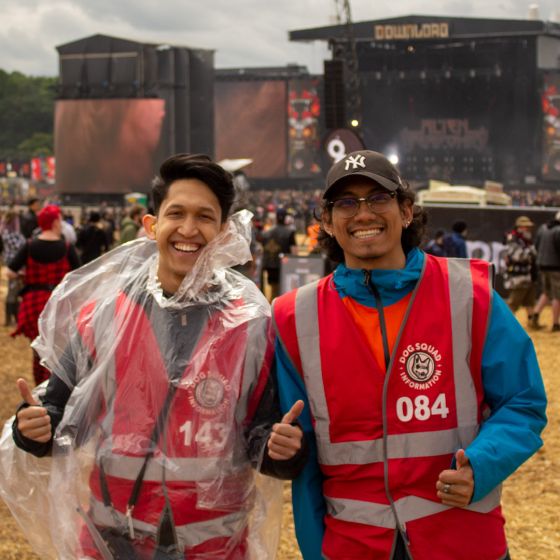
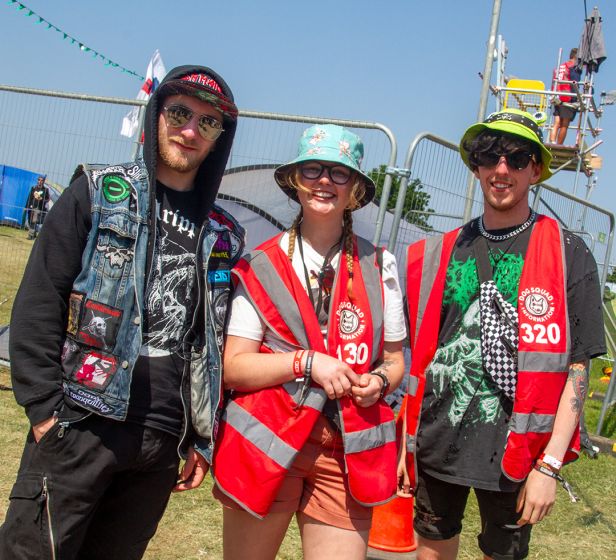
Our festival volunteers work across Download Festival, helping festival-goers get the most out of their music festival experience!
If you'd like to get involved, see behind the scenes, meet other volunteers from around the world, make new friends, gain valuable experience for your CV and have a whole lot of fun, you can apply to join the Hotbox Events Download Festival team in summer 2026!
When joining us as a volunteer at Download Festival, you'll be provided with entry to the festival (including lots of free time to enjoy it), as well as free staff parking and camping, free wi-fi and phone charging close to your tent, free tea, coffee and hot chocolate, as well as dedicated crew toilets, showers and catering!
Read on for more info about volunteering at Download Festival with Hotbox Events.
 No admin fees deducted from deposits
 Deposit refunds processed 30 days after the festival
 Choose shifts before the festival
 Private, secure camping and car parking
 Bring your campervan, caravan or motorhome
 Free phone charging and wi-fi
 Crew toilets and hot showers
 Free tea, coffee, and hot chocolate
 Discounted festival food
YOUR POSITION CONFIRMED IN 24 HOURS
For a brief window, the "Shakeela wave" was a legitimate threat to the mainstream industry. Her films were dubbed into Tamil, Telugu, and even Hindi, making her a pan-South Indian phenomenon. Aesthetic and Narrative Tropes
The rise of high-speed internet and the availability of adult content online removed the "novelty" of watching these films in theaters.
Unlike mainstream films that focused on family values or heroic sagas, these movies were produced on shoestring budgets, often shot in 10 to 15 days, usually in remote villas or plantations. They relied on sensationalist posters and provocative titles to draw crowds. The Icons: Shakeela and Silk Smitha
By the mid-2000s, the "Shakeela era" began to fade. Several factors contributed to its decline:
The plots often touched upon themes that mainstream cinema avoided, albeit through a voyeuristic lens. The Impact on Single-Screen Theaters
While the "Malayalam B-grade movie" is largely a thing of the past, its influence on the distribution and survival of Kerala’s theater culture remains a significant, if polarizing, part of the state's cinematic legacy. AI responses may include mistakes. Learn more
In the late 90s, the Malayalam film industry (Mollywood) faced a slump. Big-budget superstar films were failing at the box office, and video piracy was on the rise. Into this vacuum stepped low-budget producers who realized there was a massive, underserved market for adult-oriented content.
During this era, many small-town theaters in Kerala stayed afloat solely because of B-grade movies. While the urban elite looked down on them, these films provided a steady stream of revenue. However, this also led to the "moral policing" of cinema halls, as these screenings were often raided or protested by local groups. The Decline and Transition
Around 2010, Malayalam cinema underwent a creative revolution. Filmmakers began telling realistic, gritty, and bold stories that incorporated mature themes with artistic integrity, leaving little room for low-quality B-movies. Modern Legacy and Retrospection








For a brief window, the "Shakeela wave" was a legitimate threat to the mainstream industry. Her films were dubbed into Tamil, Telugu, and even Hindi, making her a pan-South Indian phenomenon. Aesthetic and Narrative Tropes
The rise of high-speed internet and the availability of adult content online removed the "novelty" of watching these films in theaters.
Unlike mainstream films that focused on family values or heroic sagas, these movies were produced on shoestring budgets, often shot in 10 to 15 days, usually in remote villas or plantations. They relied on sensationalist posters and provocative titles to draw crowds. The Icons: Shakeela and Silk Smitha malayalam b grade movies
By the mid-2000s, the "Shakeela era" began to fade. Several factors contributed to its decline:
The plots often touched upon themes that mainstream cinema avoided, albeit through a voyeuristic lens. The Impact on Single-Screen Theaters For a brief window, the "Shakeela wave" was
While the "Malayalam B-grade movie" is largely a thing of the past, its influence on the distribution and survival of Kerala’s theater culture remains a significant, if polarizing, part of the state's cinematic legacy. AI responses may include mistakes. Learn more
In the late 90s, the Malayalam film industry (Mollywood) faced a slump. Big-budget superstar films were failing at the box office, and video piracy was on the rise. Into this vacuum stepped low-budget producers who realized there was a massive, underserved market for adult-oriented content. Unlike mainstream films that focused on family values
During this era, many small-town theaters in Kerala stayed afloat solely because of B-grade movies. While the urban elite looked down on them, these films provided a steady stream of revenue. However, this also led to the "moral policing" of cinema halls, as these screenings were often raided or protested by local groups. The Decline and Transition
Around 2010, Malayalam cinema underwent a creative revolution. Filmmakers began telling realistic, gritty, and bold stories that incorporated mature themes with artistic integrity, leaving little room for low-quality B-movies. Modern Legacy and Retrospection