Shemale Amateur Tranny Upd [exclusive] Official

Shemale Amateur Tranny Upd [exclusive] Official

LGBTQ+ culture is not a monolith; it is a coalition. The transgender community remains its heartbeat, reminding the world that the ultimate goal of the movement is the freedom to define oneself on one’s own terms.

Trans people face higher rates of workplace discrimination and housing instability compared to cisgender gay and lesbian individuals.

Despite the "pride" of the umbrella, the transgender community often faces steeper hurdles than their cisgender (LGB) peers. shemale amateur tranny upd

The transgender community and the broader LGBTQ+ culture are bound by a shared history of resistance, a common fight for civil rights, and a vibrant tapestry of shared spaces. While "LGBTQ+" serves as an umbrella term, the "T" represents a distinct journey of gender identity that has both anchored and revolutionized the movement.

Within LGBTQ+ culture, this distinction is vital. A transgender person can be gay, straight, bisexual, or asexual. By including the transgender community, the LGBTQ+ movement acknowledges that liberation requires dismantling both "heteronormativity" (the assumption that everyone is straight) and "cisnormativity" (the assumption that everyone identifies with the sex they were assigned at birth). Cultural Contributions and Language LGBTQ+ culture is not a monolith; it is a coalition

The modern LGBTQ+ rights movement didn’t start in boardrooms; it started in the streets, led largely by transgender women of color. Figures like and Sylvia Rivera were at the forefront of the 1969 Stonewall Uprising. At the time, the distinction between "gay" and "transgender" was less rigid in the public eye—everyone who defied traditional gender and sexual norms was grouped together.

These disparities sometimes lead to friction within the culture, as trans activists call for the "LGB" portions of the community to use their relative social capital to protect the most vulnerable members of the "T." The Future of the Community Despite the "pride" of the umbrella, the transgender

Transgender individuals have been the primary architects of much of the language and aesthetics used in LGBTQ+ culture today.

Originating in the Black and Latine trans communities of New York City, ballroom culture gave us "voguing," "slay," and the concept of "chosen families."

This shared history created a foundation of solidarity. Transgender people provided the "radical" spark that demanded more than just tolerance; they demanded the right to exist authentically in public spaces. The "T" in the Umbrella: Identity vs. Orientation
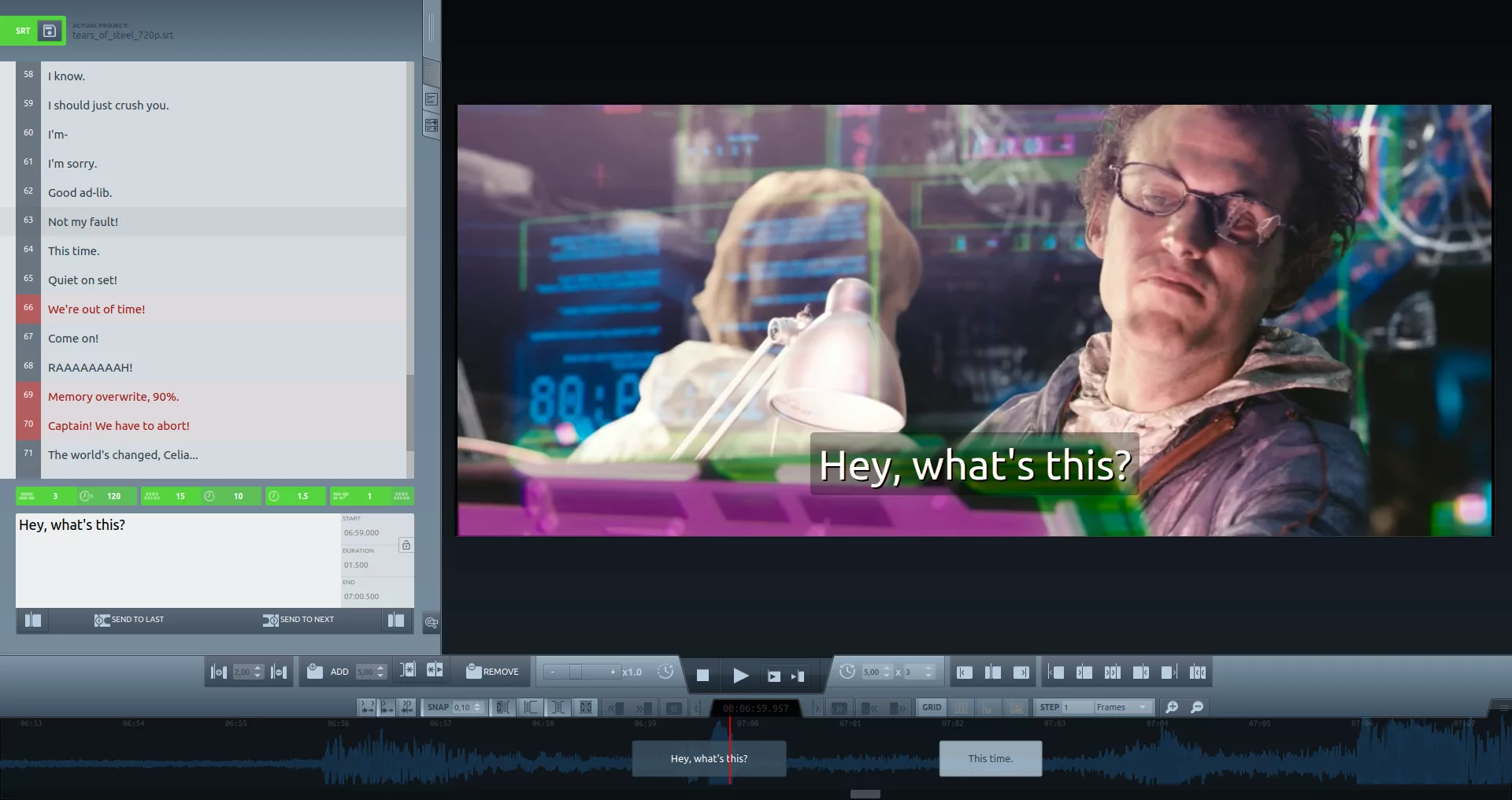
Subtitld is an open source software to edit,
transcribe and create subtitles.

It is able to read and write various formats like SRT, SSA, TTML, SBV, DFXP, VTT, XML, SCC and SAMI.

Subtitld screenshot

LGBTQ+ culture is not a monolith; it is a coalition. The transgender community remains its heartbeat, reminding the world that the ultimate goal of the movement is the freedom to define oneself on one’s own terms.

Trans people face higher rates of workplace discrimination and housing instability compared to cisgender gay and lesbian individuals.

Despite the "pride" of the umbrella, the transgender community often faces steeper hurdles than their cisgender (LGB) peers.

The transgender community and the broader LGBTQ+ culture are bound by a shared history of resistance, a common fight for civil rights, and a vibrant tapestry of shared spaces. While "LGBTQ+" serves as an umbrella term, the "T" represents a distinct journey of gender identity that has both anchored and revolutionized the movement.

Within LGBTQ+ culture, this distinction is vital. A transgender person can be gay, straight, bisexual, or asexual. By including the transgender community, the LGBTQ+ movement acknowledges that liberation requires dismantling both "heteronormativity" (the assumption that everyone is straight) and "cisnormativity" (the assumption that everyone identifies with the sex they were assigned at birth). Cultural Contributions and Language

The modern LGBTQ+ rights movement didn’t start in boardrooms; it started in the streets, led largely by transgender women of color. Figures like and Sylvia Rivera were at the forefront of the 1969 Stonewall Uprising. At the time, the distinction between "gay" and "transgender" was less rigid in the public eye—everyone who defied traditional gender and sexual norms was grouped together.

These disparities sometimes lead to friction within the culture, as trans activists call for the "LGB" portions of the community to use their relative social capital to protect the most vulnerable members of the "T." The Future of the Community

Transgender individuals have been the primary architects of much of the language and aesthetics used in LGBTQ+ culture today.

Originating in the Black and Latine trans communities of New York City, ballroom culture gave us "voguing," "slay," and the concept of "chosen families."

This shared history created a foundation of solidarity. Transgender people provided the "radical" spark that demanded more than just tolerance; they demanded the right to exist authentically in public spaces. The "T" in the Umbrella: Identity vs. Orientation

Last, but not least

Unlimited video duration

No video time length limit.

Resizeable window

The interface adjusts to your screen.

MPV playback engine

Based on a powerful multimedia playback engine.

ffmpeg internal processes

Internal tasks are based on a powerful audio/video manipulation tool.

Consider supporting us

Subscriptions allow us to spend much more time to develop this project. We also accept standard one-time donations.

Download

Subtitld is open source and multiplatform, and both the source code and the installers are provided.

If you find a bug or want new features to be added, please file a report on GitHub or send us an email.

For latest beta releases, visit builds.subtitld.org.